Kitchen Lighting Guide: Best Design Tips for Custom Kitchens
Essential Kitchen Lighting Ideas for Your New Custom Kitchen
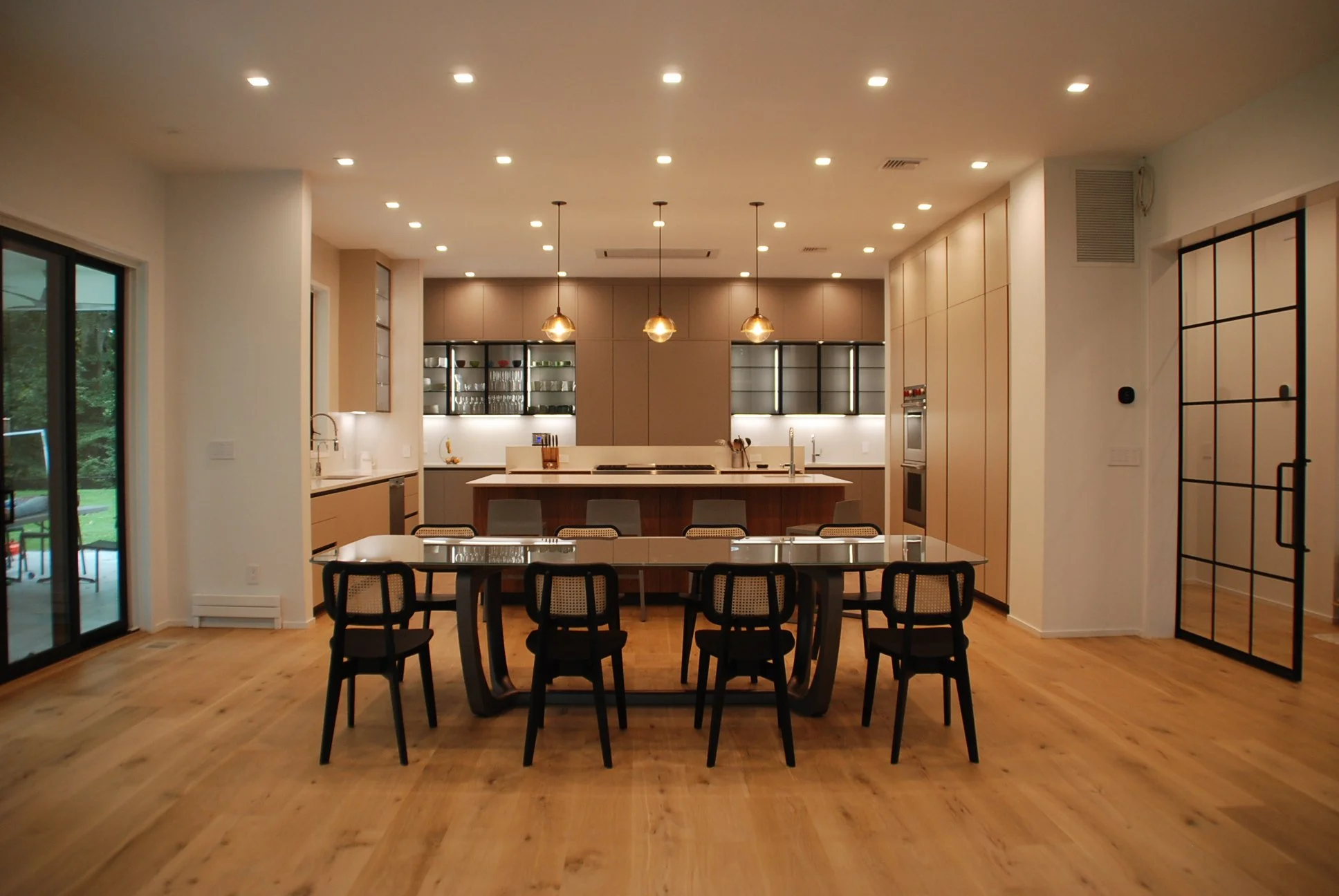
Modern kitchen with recessed ceiling lights, under-cabinet strip lighting, inside cabinet lights and pendant lights over an island, shows how layered ambient, task and accent lighting design creates the best kitchen environment for work and play. Manhasset, NY
Most homeowners spend weeks choosing custom cabinets and countertops, then make their lighting decisions in an afternoon. That's a mistake. We will show you why you should always overthink your kitchen lighting. Must-know kitchen lighting design tips for your new kitchen start with one core principle: lighting does more work in a kitchen than in almost any other room. It supports prep, cooking, cleaning, and entertaining — often all at once. Get it wrong and even a beautifully designed luxury kitchen feels dim, flat, or frustrating to use.
Why Kitchen Lighting Deserves More Thought Than Most Decisions
Kitchen lighting affects how you see food, how safe the workspace feels, and how the room looks morning through evening. A single overhead fixture — the default in many new builds — creates shadows on countertops and leaves the edges of the room in gloom. Cooking in those conditions isn't just inconvenient. It can be a safety issue.
Lighting also affects how the kitchen feels. A bright, evenly lit space reads as clean and functional. A kitchen with layered, dimmable light sources reads as warm and considered. The difference is rarely about budget — it's about planning. Decisions made early, before walls are closed and cabinets installed, give you far more options and lower installation costs.
What Are the Benefits of Planning Kitchen Lighting Before You Move In?
Planning your lighting before you arrive in a new home or renovated kitchen is significantly easier than retrofitting it later. Electricians can run cable, position recessed LED downlights, and rough in under-cabinet wiring while walls are accessible. Once you're living in the space, the same work becomes more disruptive and expensive. The kitchen is a prime candidate for this kind of early-design planning. For a new build or whole home remodel, completing these decisions ahead of time also means your kitchen is functional from the moment you move in — not a project you're managing around boxes and appliances. Benefits of remodeling your kitchen before moving into a new home include avoiding the disruption of live-in renovation and giving your household a working kitchen from day one.
Understanding the 3 Main Types of Kitchen Lighting (Ambient, Task, Accent)
What Are the Three Layers of Kitchen Lighting? Layered lighting is the standard approach used by professional kitchen designers, and for good reason. It divides the work of illuminating a kitchen into three distinct functions, each served by a different type of fixture. Ambient lighting is the room's baseline illumination — the equivalent of natural light. Recessed downlights are the most common source, though flush-mount fixtures and track lighting also work. Task lighting targets specific work areas: countertops, the sink, and the cooktop. Under-cabinet strip lights and pendant lights over islands fall into this category. Accent lighting adds depth and visual interest — toe-kick LEDs, inside-cabinet lighting, or a statement fixture over a dining area adjacent to the kitchen. All three layers work together. Relying on one source alone, however bright, leaves the kitchen feeling flat. When you move into a new space, the kitchen is often one of the first rooms people settle into. Having layered lighting installed from the beginning makes that adjustment much smoother and more comfortable.
Before you discuss a lighting plan with your designer, take time to assess the current natural light in the space, and explore opportunities to enhance it by adding or expanding windows, installing skylights, or incorporating light from adjacent rooms.
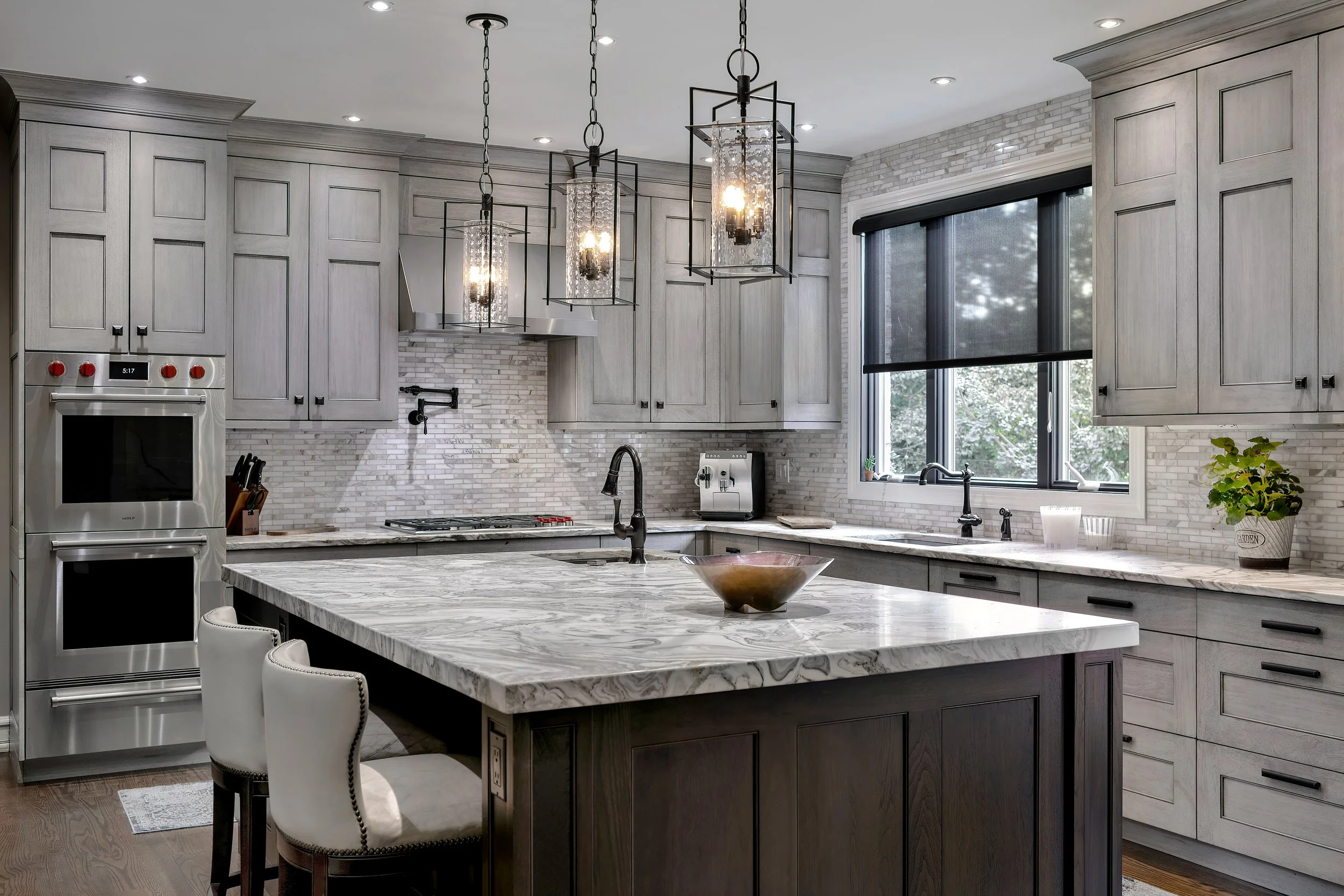
Brilliant Lighting for a Show-Stopping Custom Kitchen in Glen Head, Long Island
How to Layer Lighting for Maximum Impact
When it comes to designing a custom kitchen, layered lighting is the secret to achieving both beauty and functionality. Instead of relying on a single light source, combine ambient, task, and accent lighting to create depth, warmth, and flexibility in your space. Ambient lighting — such as recessed ceiling lights or a central chandelier — provides overall illumination, ensuring the room feels bright and welcoming. Task lighting, like under-cabinet LED strips or pendant lights over an island, focuses light exactly where you need it for cooking, prepping, and cleaning. Finally, accent lighting highlights design features, from glass-front cabinets to textured backsplashes, adding personality and visual interest.
The real magic happens when these three layers work together. For example, you might use dimmable recessed lights for general brightness, pendant lights for focused work areas, and subtle toe-kick or shelf lighting to create a cozy evening glow. This approach not only enhances the functionality of your custom kitchen but also allows you to adjust the mood for different occasions — from lively family dinners to intimate late-night snacks. By thoughtfully layering your lighting, you’ll ensure your kitchen is as practical as it is stunning.
Pro Tip: Layering Kitchen Lighting Like a Pro
1. Fixture Suggestions
Ambient: Recessed LED downlights, flush-mount ceiling fixtures, or a statement chandelier.
Task: Under-cabinet LED strips, pendant lights over islands, adjustable track lighting.
Accent: LED puck lights inside glass cabinets, toe-kick lighting, wall sconces, or above-cabinet uplighting.
2. Placement Tips
Space recessed lights 4–6 feet apart for even coverage.
Hang pendant lights 28–34 inches above countertops for optimal task lighting.
Position under-cabinet lights toward the front edge to avoid casting shadows on your workspace.
3. Brightness & Color Temperature
Ambient: 2,700–3,000K (warm white) for a welcoming feel.
Task: 3,000–4,000K (neutral white) for clarity while cooking.
Accent: 2,700K for a cozy, decorative glow.
Aim for 50–70 lumens per square foot in task areas.
4. Bonus Tip: Use dimmers on all three layers so you can easily shift from bright and functional to soft and atmospheric.
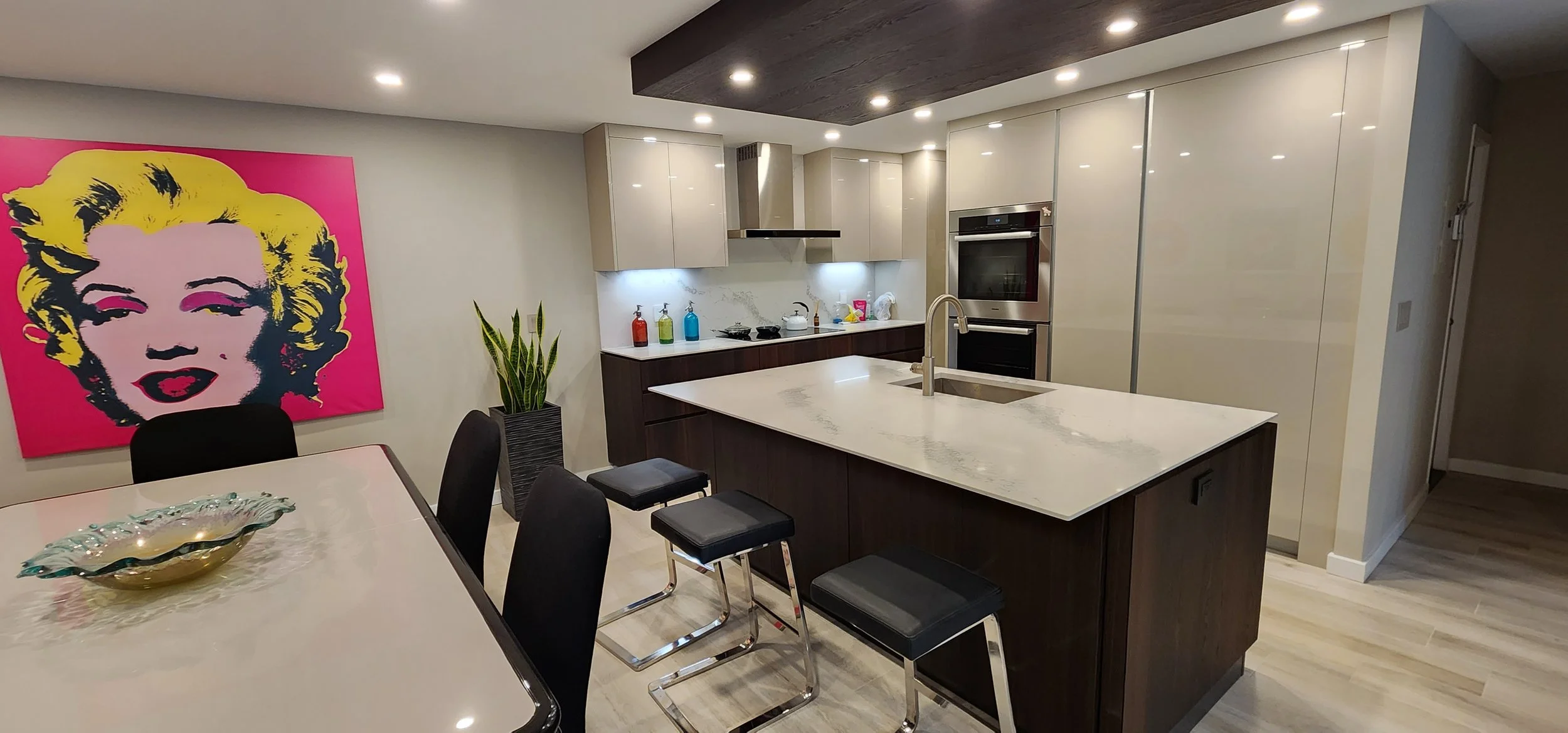
Modern Long Island Kitchen design includes layers of lighting for optimal beauty and function Roslyn, NY
Where Should Task Lighting Go in a Kitchen?
Task lighting belongs wherever you do focused work. That means under every wall cabinet that sits above a countertop, over the sink, and above or beside the cooktop. Under-cabinet lighting is one of the most consistently useful upgrades in any kitchen — it eliminates the shadow your own body casts when you stand at the counter.
Pendant lights over an island serve a dual purpose: they add ambient light to the island surface and serve as a design statement. Spacing matters. Two or three pendants, sized in proportion to the island length, typically work better than a single large fixture. Under-cabinet strips, toe-kick LEDs, and other luxury touches that elevate any kitchen remodel follow the same principle — each fixture has a specific job, and together they create a layered, polished result.
How Does Color Temperature Affect the Feel of Your Kitchen?
Color temperature is measured in Kelvins (K) and describes whether light appears warm, neutral, or cool. In kitchens, the choice has practical and aesthetic consequences. Warm light (2700–3000K) creates a relaxed, residential atmosphere but can make it harder to judge the color of food accurately. Neutral to cool light (3000–4000K) is better for prep work and cleaning — it makes surfaces look crisper and more accurate.
Most kitchen designers recommend staying in the 2700–3000K range for ambient and accent light, then using 3000–4000K for task lighting under cabinets. This gives you warmth in the broader space and clarity where you're working. LED bulbs now cover this full spectrum and use up to 75% less energy than incandescent equivalents, according to LED lighting guidance from the U.S. Department of Energy. Matching color temperature across all fixtures in the kitchen keeps the overall look cohesive.
What About Dimmers and Lighting Controls?
Dimmers are one of the most cost-effective upgrades in kitchen lighting. They let ambient and accent circuits shift from full brightness during meal prep to a lower, warmer setting during dinner or evenings. Not every fixture is dimmable by default — check compatibility before purchasing bulbs or controls, as LED dimmers in particular require matched components.
Separate circuits for ambient, task, and accent lighting are worth including if you're doing any electrical work before renovation or move-in. They give you independent control over each layer — something that becomes especially useful as your daily routines settle. Thoughtful decisions made early, from dimmer selection to circuit planning, are exactly the kind of design and quality choices that matter most in luxury renovations and pay off long after move-in day.
The Light That Makes a Kitchen Feel Like Home
The Secret Ingredient in Every Stunning Custom Kitchen? Lighting
Kitchen lighting design for your new home or renovation is not a detail to finalize after everything else is done. It shapes how the room functions every day and how it feels every evening. Start with the three-layer framework, plan task lighting around your actual workflow, choose a color temperature that matches how you use the space, and add dimmer controls wherever possible. A kitchen that's well-lit from day one is far easier to enjoy — and far easier to live in — than one you're planning to fix later. If you're designing or renovating a kitchen on Long Island or in New York City, the team at Elite Kitchen & Bath in Manhasset can walk you through every decision, from fixture selection to final installation. Inquire about a complimentary consultation.
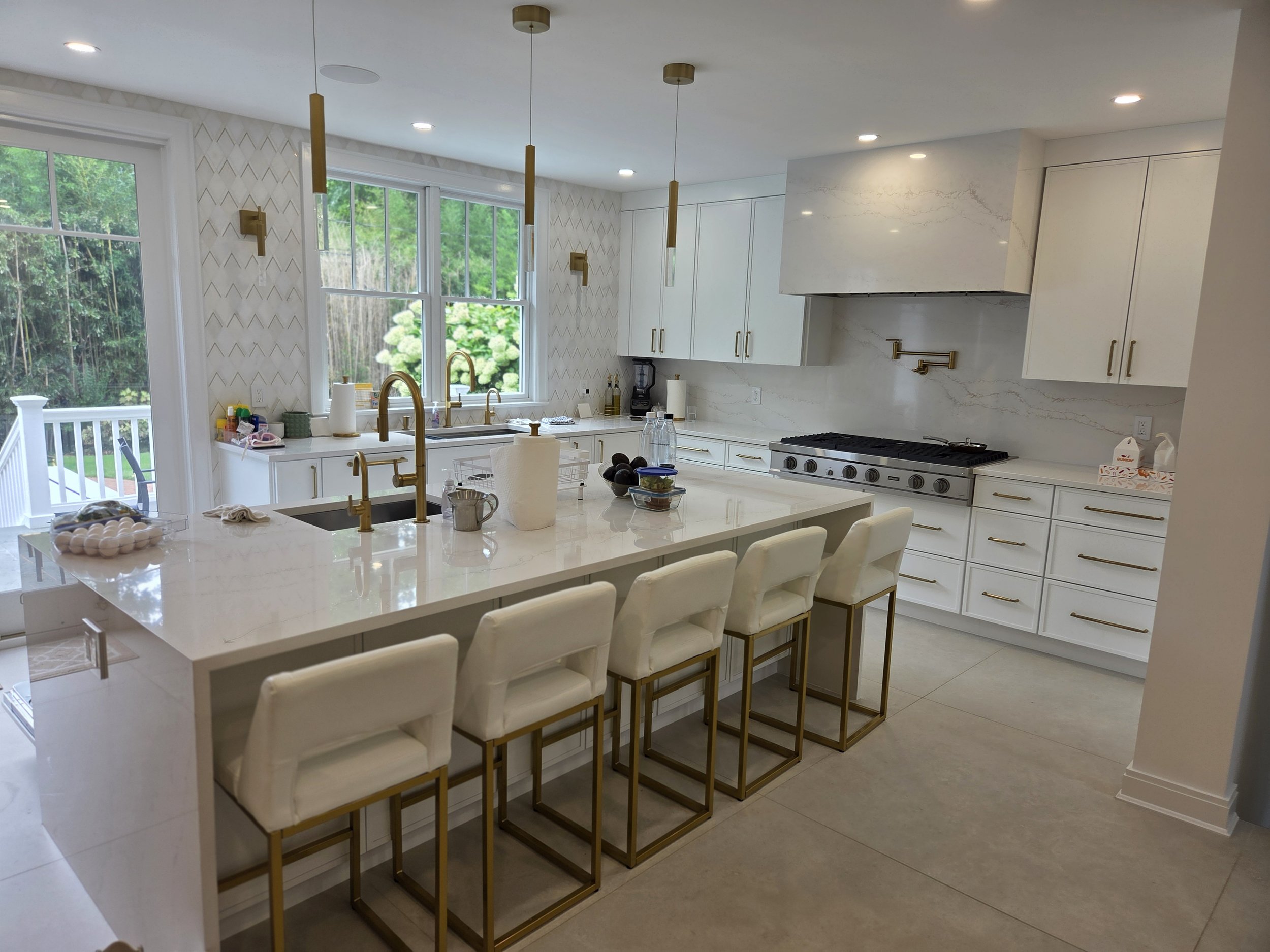
Custom Long Island Kitchen Remodel. Great Neck, NY